


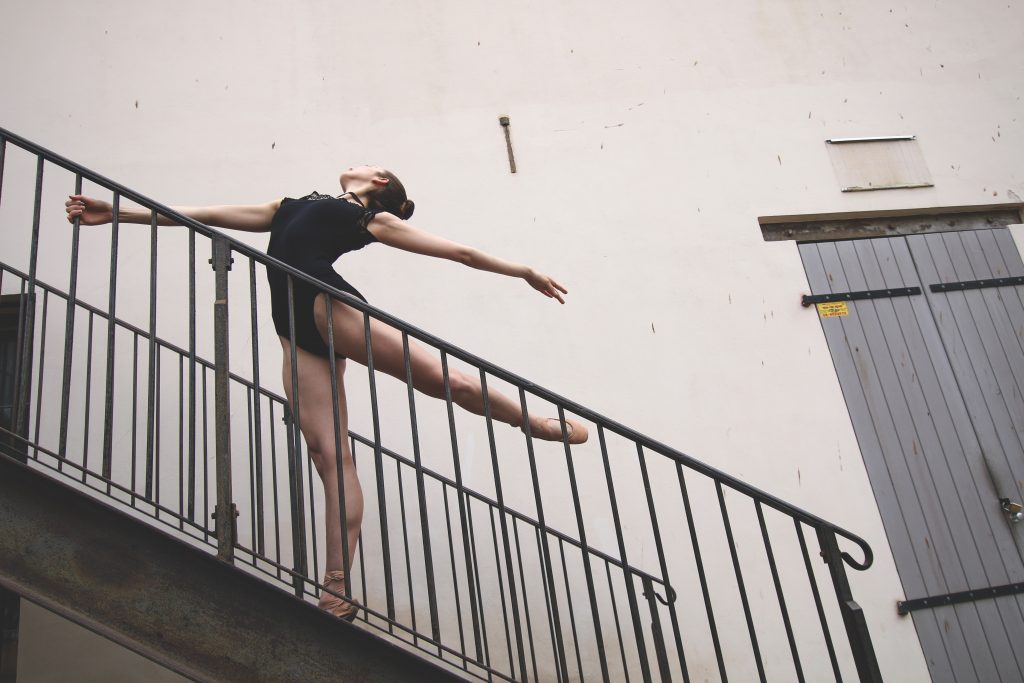
Have you noticed that your teenage dancer had a big growth spurt over the last few months?
I’ve been seeing several dancers recently for annual physicals and have consistently found many of them have grown quite a bit taller since March.
This shouldn’t be a major surprise.
In the past, dancers and other performers/athletes who have taken months off have also tended to experience growth spurts.
So, why have dancers gotten taller when they aren’t dancing as much?
- Without the higher energy demands from full dance activities (even the best on-line classes don’t equal the fitness expenditures of in-studio work), the body can dedicate more calories to overall height accumulation.
- Dancers spending more evening hours at home get increased numbers of home-cooked meals which tend to deliver better nutrient and caloric amounts needed for growth.
- Then “at the end of the day” you throw in probably the most important variable for promoting more growth – sufficient sleep!
Without having to balance school, homework, and dance class commitments, suddenly the goal of 8 hours of sleep is being attained on a nightly basis.
Now, those growth spurts do bring some challenges with them.
How should instructors and parents be prepared for when those taller dancers return to the studio?
- Expect more awkward movements. The previously graceful ballerina who floated across the floor now routinely trips over everything. The key muscle support groups behind the shoulders and hips often need more developmental time to adequately control movements of the now longer arms and legs. In addition, the central nervous system also needs time to catch up with coordinating movements, overall balance, and joint positioning.
- Anticipate earlier fatigue due to that lack of central strength. Plan on fewer numbers of turn combinations, leaps or jumps with longer rest periods between sets of each.
- Overall soft tissue flexibility will be reduced, as increases in length of muscles, tendons and ligaments often lag behind bone growth.
- Expect more soreness, especially at points called apophyses where larger muscles attach to growth areas of bone. Prime examples include the hamstrings coming off the pelvis, quadriceps attaching to the shin bone, and the calf muscles ending at the heel bone.
- There will be a higher center of gravity which may affect turns, leaps, and kicks.
- Accept less kick height due to tighter hamstring muscles.
- Instructors might have to identify different lifting partners (when allowed) due to changes in height and strength
This is a key time to return to the basics of dance — almost as if working with true beginners. Give dancers ample time to essentially relearn how to recruit and activate key muscles to control those longer legs and arms. Turns and tumbling will look somewhat out of control until the dancer becomes more accustomed to a higher center of gravity. This is also a good time to correct any bad habits or “cheating” that took place in the past.
Individualized assessment of technique and core strength development (again, back of shoulders, hips, and abdominal region) classes should be a priority. Don’t be afraid to move slow and focus on quality and details rather than quantity and rapid advancement.
How about flexibility and stretching?
This is probably not as high of an initial emphasis.
While many dancers may be concerned about lack of flexibility, trying to over stretch during or right after a growth spurt can actually do more harm than good. Over-stretching can tear muscle fibers leading to longer-term pain and reduced strength. It can also lead to avulsion fractures at those apophyseal growth areas which are often the “weakest link” during rapid growth. A fractured apophyses can take months to properly heal.
It is better to focus on development of central/core strength which then naturally leads to less tension and more flexibility in the longer muscles. For example, more proper activation and control of the hip gluteal muscles reduces stress on both the hamstring and iliotibial band regions of the legs.
Once more “usual schedules” resume, we must remember the importance of adequate caloric intake and sleep in the long-term growth and development of our teenage dancers.
Hopefully there will be more time carved out for those home meals, even if it means a reduction in total classes or private sessions. Not only does a good dinner help build stronger dancers, but it also can build stronger social connections for families.
The extra sleep (again at least 8 hours a night for high school students) is also absolutely essential for both physical and cognitive performances.
We won’t expect that dancers who continue to get more energy intake and sleep to keep getting taller. Obviously, there is an end point to final maximum height (can thank mom and dad for that). Those extra calories and hours of sleep will be converted into the development and maintenance of muscles (increased volume and number of motor units) and bones (higher bone mineral density).
A growing young dancer will be excited to hear the good news that those stronger bones and muscles ultimately will better handle repetitive forces and reduce risk of overload stress injuries.


Dr. Chris Koutures is a dual board-certified pediatric and sports medicine specialist who practices at ActiveKidMD in Anaheim Hills, CA. He is a team physician for USA Volleyball (including participating in the 2008 Beijing Olympics), the U.S. Figure Skating Sports Medicine Network, Cal State Fullerton Intercollegiate Athletics, Chapman University Dance Department, and Orange Lutheran High School. He offers a comprehensive blend of general pediatric and sport medicine care with an individualized approach to each patient and family. Please visit activekidmd.com or follow him on Facebook (https://www.facebook.com/activekidmd/), Instagram (https://www.instagram.com/activekidmd/), or Twitter (@dockoutures).